
The Story
The Paths
Where Maharshi Pulaha sat, where Bharat knelt, where rishis have performed penance since before the mountains had names.
The word tapas comes from the root tap — to burn. In the Vedic imagination, tapas is the inner heat generated when a being holds attention so steadily, and for so long, that the ordinary frame of the body dissolves.
The Rigveda opens with tapas at the foundation of creation itself. The Nasadiya Sukta — the Hymn of Creation — states that before light, before breath, before the distinction between being and non-being, that One breathed, without breath, by its own tapas. The universe was not spoken into existence. It was heated into existence. Creation is the first act of asceticism.
From this root, the tradition draws a steady line. The rishis who stand at the origin of every lineage — Vasishtha, Vishvamitra, Agastya, Pulaha — are named as those who re-performed the work of creation in their own bodies. Through tapas they became, in miniature, what the Creator had been: conscious, concentrated, capable of manifesting form from attention.
For such a discipline, the ground matters. Not every place can hold the heat. The shastra-s name specific tapo-bhoomi — grounds of tapas — where the terrain, the altitude, the water, and the lineage of previous tapas accumulated over millennia make the work of concentration possible. Mukti Kshetra is the first-named among them in the Bhagavata.
The Kali Gandaki corridor is the single place on the subcontinent where the five elements — earth, water, fire, air, and sky — are present in their purest, most separate forms, at one altitude.
At Muktinath, at 3,710 metres, four are immediately visible. The temple complex holds Jwala Mai — the eternal flame, natural gas seeping from fissures in the rock and burning continuously, fire emerging from earth, with water flowing past it. Fire, water, and earth in one chamber. The 108 Mukti Dhara — the spouts that ring the main shrine — pour ice-cold water drawn from the glacial feed above. The wind at this altitude, the prana of the thin air itself, is the fourth element. The fifth — akasha, the open sky — is simply everything overhead.
This is what the Puranas mean when they call Mukti Kshetra a place where panchabhuta is legible. Most of India's great tirthas are associated with one element — Kashi with water, Rameshwaram with sand, Kedarnath with stone. Mukti Kshetra holds all five, within walking distance, at the same altitude. For a yogi performing tapas, this matters: the discipline requires the body to reconcile with each of the five elements in turn. Here, the elements come to the ascetic.
The Kali Gandaki below adds what no other site offers: a river older than the mountains themselves. When the Himalaya rose, the river was already flowing; it simply cut through. The sediments it carries down from the Tethys seabed — ammonite shells from an ocean that existed before the plates collided — are the physical witnesses of a world that predates this world. The ground at Mukti Kshetra is literally the intersection of deep time and the living present. For tapas, this is why.
Bhagavata · Kurma · Varaha Puranas · Tirtha khandaIn the Bhagavata Purana (Book 5, Chapter 7), the narrator Suta names this ground directly: Pulaha-ashram. The ashram of Maharshi Pulaha.
Pulaha is one of the Sapta-Rishi — the seven mind-born sons of Brahma from whom every Vedic lineage descends. The shastra-s say that when creation was still new, the Sapta-Rishi went to seven different grounds to perform tapas, and from each of those grounds, a spiritual transmission began. Pulaha chose here. He chose this one corner of the Kali Gandaki, at the foot of what would later become the Annapurna massif, and he performed his penance here for an age.
The place took his name. Pulha-ashram — the ashram of Pulaha — is what the Kali Gandaki corridor is called across the Puranic canon. The ground held the tapas of a rishi so completely that, from his time onward, anyone who came here to perform their own tapas was performing it inside his concentration. This is what the shastra-s mean by tapas-bhoomi: a ground where previous tapas accumulates and sustains the work of new tapas. You do not start from zero here. You step into a current.
Bhagavata Purana · Book 5 · Chapter 7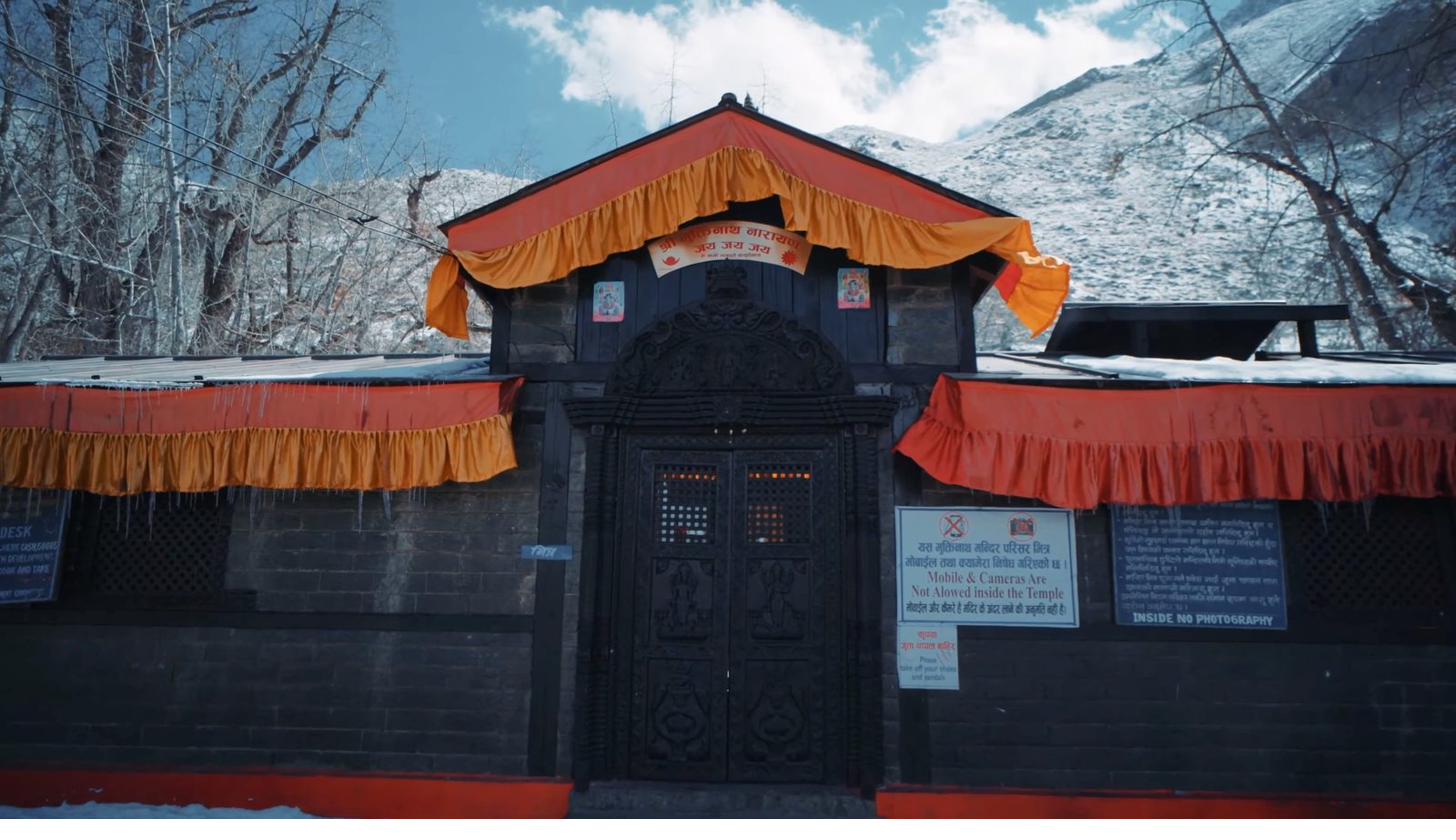
The same fifth book of the Bhagavata that names Pulhashram tells the full story of Bharat — the emperor whose name the subcontinent still carries. Bharata-varsha is named for him.
Bharat was the eldest son of Rishabhadeva, himself a manifestation of Vishnu. He ruled a vast kingdom. And then, in a gesture that the Bhagavata presents without apology, he simply left. He handed his empire to his sons, took nothing with him, and walked north. He came to the ashram of Pulaha. And at this ground — on the banks of this river — he began the penance that would occupy the rest of his life.
The Bhagavata gives the detail. He bathed in the Kali Gandaki. He recited the Gayatri. He lived on fruits and leaves. He sought Vishnu through continuous attention. (Any satsangi who has read Shatanand Muni's account of Nilkanth Varni's four months here in Chapter 44 will recognize every element of this description. It is not coincidence. Nilkanth Varni was consciously re-performing Bharat's tapasya, at the same ground, in the same mode.)
Bharat did not attain liberation in that life. The Bhagavata tells us he was reborn — first as a deer, then as the great rishi Jada Bharata — before reaching final moksha. But the ground he chose remembered him. To perform tapas at Pulhashram is to insert oneself into his lineage of seekers, just as he had inserted himself into the lineage of Pulaha.
Bhagavata Purana · Book 5 · Chapters 7 – 8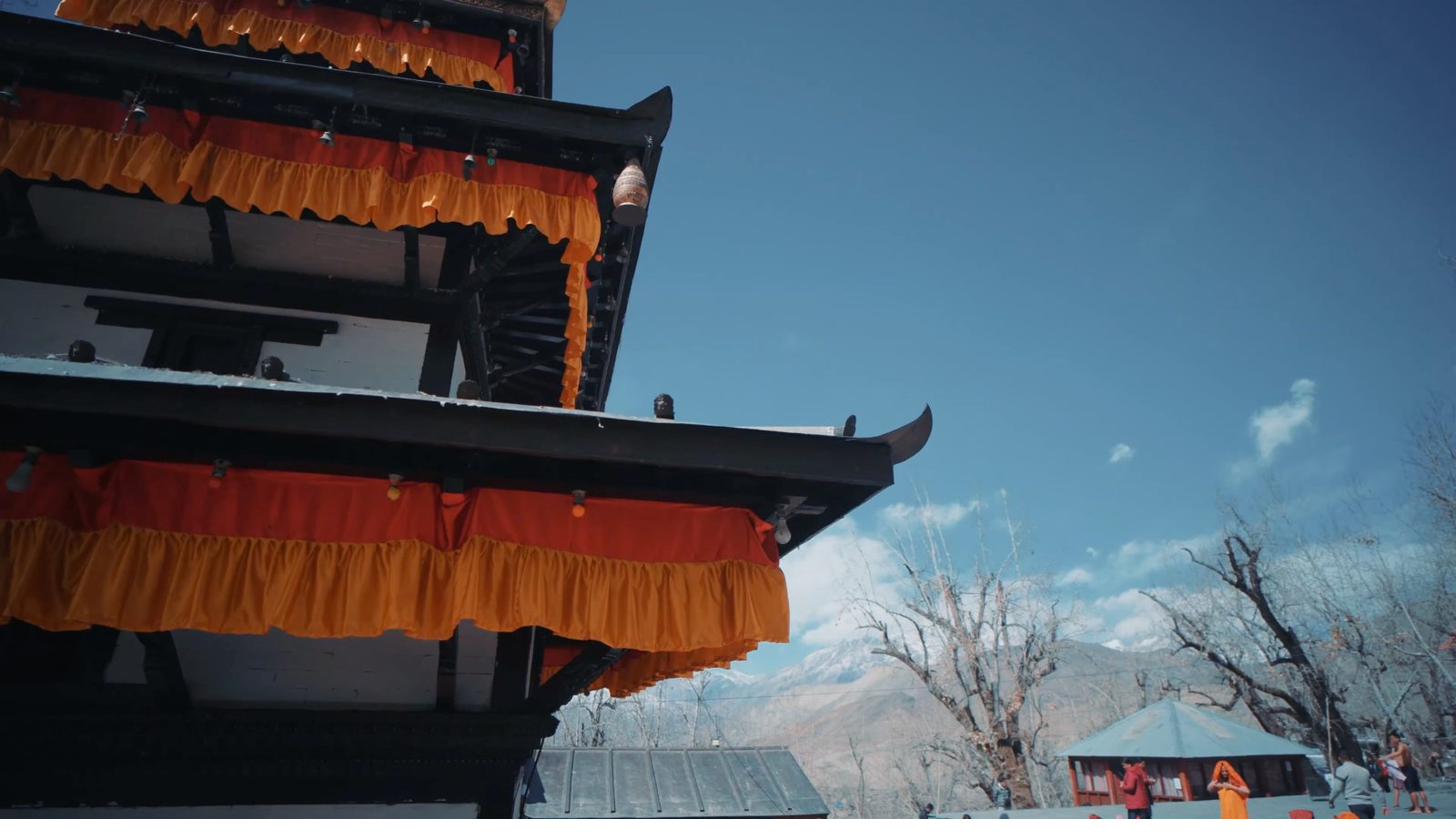
What the Bhagavata records of Bharat is what Shatanand Muni records of Nilkanth Varni. The details are not similar. They are identical.
Both arrived at the banks of the Kali Gandaki. Both bathed in the river. Both lived on fruits and leaves. Both recited the Gayatri. Both performed their tapas standing — the specific tap-mudra, one leg, both arms raised. Both held the posture for a sustained period without breaking. Both received a direct theophany at the close of the penance — Vishnu in Bharat's case, Suryanarayan in Nilkanth Varni's.
A tradition like this does not arise by accident. When Shatanand Muni wrote the Satsangi Jeevan, he was not inventing a parallel. He was confirming an inheritance. Nilkanth Varni had walked the Puranas open in his hand. He knew where Bharat had sat. He knew what Pulaha had done. When he chose this ground for the deepest tapasya of his own van vicharan, he was choosing it precisely because it already held the tapas of those who had come before. He was stepping into their current.
This is what a sampraday is. Not an invention. An inheritance — received, honoured, extended. The four months Nilkanth Varni performed on this ground are the continuation of a discipline that had already been practiced here for thousands of years. The Swaminarayan sampraday's relationship to Mukti Kshetra is not devotion to a new tirtha. It is arrival at the first one.