
The Story
The Paths
Self-manifest, aniconic, borne in one river on earth — older than these mountains.
Across the Padma Purana, the Skanda Purana, the Brahma Vaivarta Purana, and the Devi Bhagavata, the Shaligram shila is named as Vishnu's aniconic form — svayam-vyakta, self-manifest, appearing not through consecration but by his own will.
In most traditions, a murti becomes divine through prana pratishtha — the rite that invites the deity to inhabit the form. Shaligram is different. It requires no such ritual. The Puranas state it unambiguously: worship of Vishnu through a Shaligram shila yields greater merit than worship through a consecrated murti — precisely because no invocation is needed. Vishnu is already present.
This is why, for centuries, in every Vaishnava household, the Shaligram has been the central object of the ghar mandir. A bronze murti must be woken, bathed, dressed, offered. A Shaligram asks only for tulasi leaves and water from the Dakshinavarti Shankha. Even a poor household, even in times of hardship, can perform full puja. The Shaligram is the democracy of Vaishnava worship — Vishnu himself, available to all.
The Brahma Vaivarta Purana gives the origin story. When Tulasi, in her previous birth as Vrinda, was tricked by Vishnu into breaking her vow, she cursed him to turn to stone. Vishnu accepted the curse. He became the great mountain Shaligram, on the banks of the Gandaki River. The Vajrakita — the worm whose teeth are as hard as a thunderbolt — carved the sacred chakra-marks into his body. And the fragments that broke from that mountain into the river, and were carried down its current, became the shila-s that every Vaishnava home holds to this day.
Brahma Vaivarta Purana · Padma Purana · Skanda PuranaOf every river in India and the Himalaya, only one carries Shaligram. And the reason is written into the geology of the continent itself.
Most Himalayan rivers were born by the Himalaya. When the Indian tectonic plate collided with the Eurasian plate some fifty million years ago, the mountains rose — and the rivers that run off them found their way down. The Kali Gandaki is the rare case that reverses this order. It was already flowing, along its current course, before the Himalaya existed. When the mountains rose, the river simply kept cutting — carving straight through the uplift. Today it flows between Dhaulagiri and Annapurna, the world's deepest gorge, a river that has outlasted the raising of the range around it.
What the river carries down is older still. The Kali Gandaki flows across the bed of what was, in the Jurassic, the Tethys Sea — the ocean that existed before the plates collided. Ammonite shells from that sea-floor, buried in sediment for one hundred and fifty million years, are what now tumble in the current. The chakra-marks the Puranas describe — the spiral patterns that identify a true Shaligram — are the chambers of those ammonites, revealed as the stone weathers.
This is why Shaligram exists here and nowhere else. Not because a sage once stood on this bank, or because a king once built a temple. But because this one river cut a path through time — through oceans that no longer exist, through mountains that were not yet there. The Kali Gandaki is Vishnu's witness to a world that predates the world.
Geology · The Tethyan Himalaya · Kali Gandaki gorgeThe Puranas list dozens of classes of Shaligram. Each is named by the markings on its body — the shape of the chakra-s, the color, the ovality — and each is worshipped in a specific way.
Lakshmi-Narayana bears two parallel chakra-s — the form to which Lakshmi and Narayana are together invoked. Shivling-roop is elongated and smooth, carrying the quiet authority of the linga. Garud-roop shows the mark of the divine eagle, Vishnu's vahana. Hayagriva bears the horse-head form. Matsya, the fish. Kurma, the tortoise. The traditional enumerations name twenty-four — one for each of the avatars in the Bhagavata's extended list — but in practice the shastra-s identify many more, each with its own prescribed puja and its own mood of devotion.
To a practiced eye, a Shaligram is read the way one reads a scripture. The markings are the text. The shape is the meter. The color tells you whether the form is settled (shanta) or awakened (ugra). For centuries, this reading has been passed from scholar to scholar — a literacy of stones, known only to those who have given their lives to learning it.
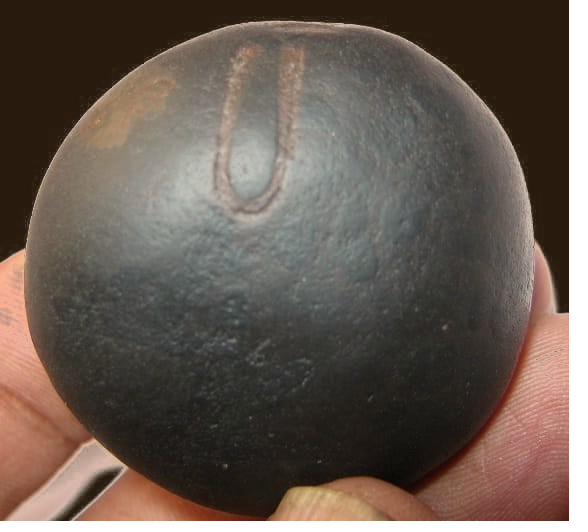
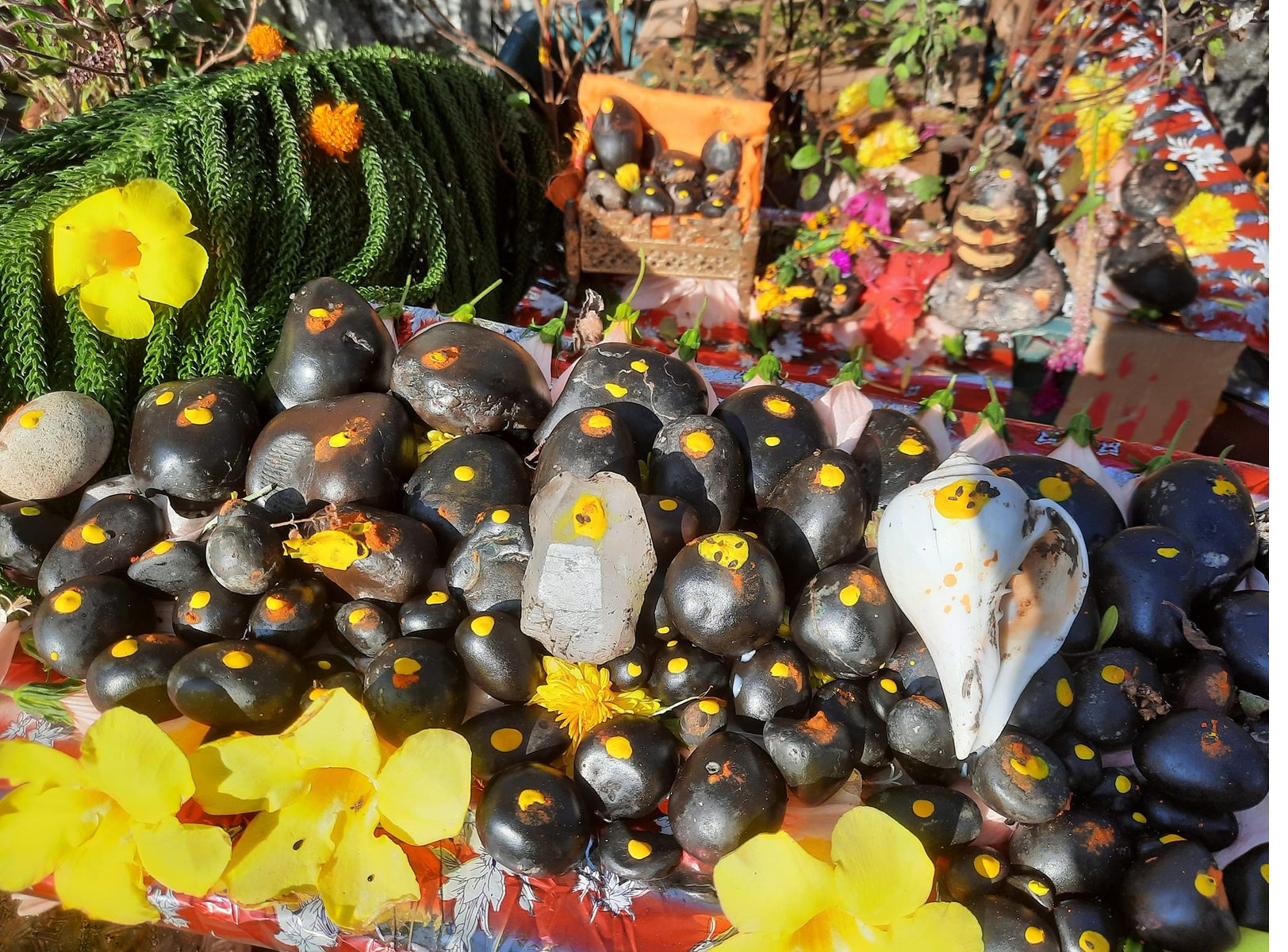
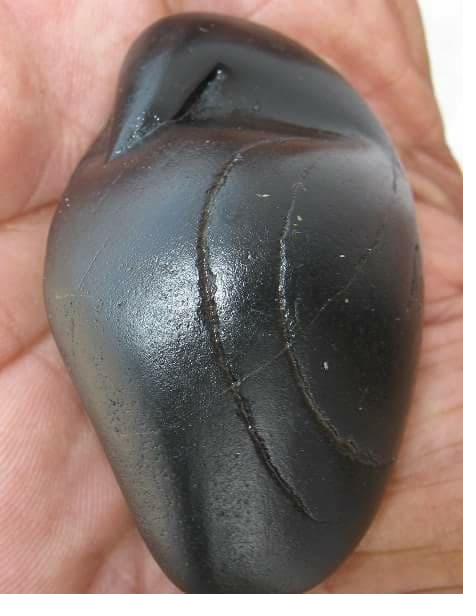
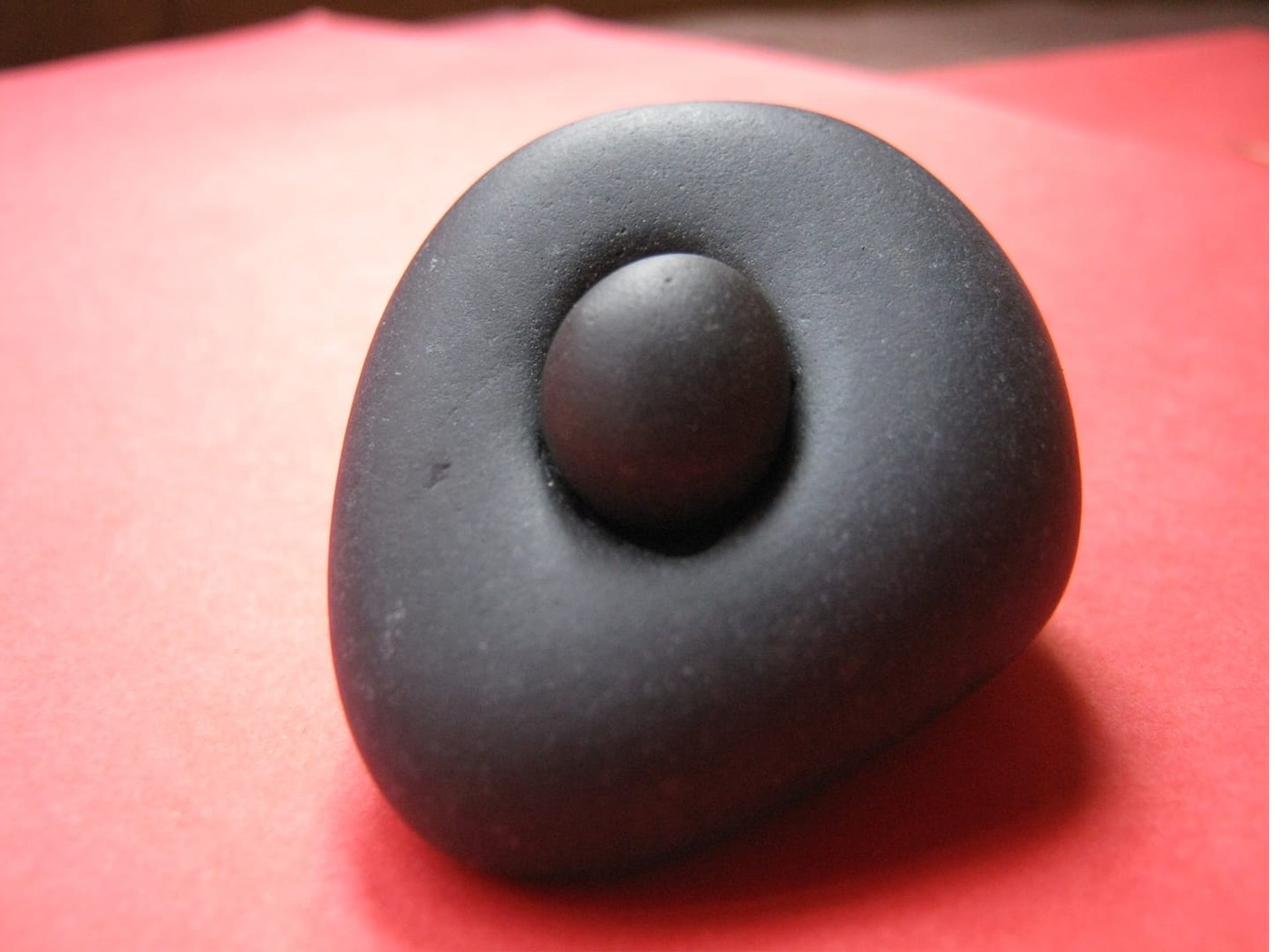
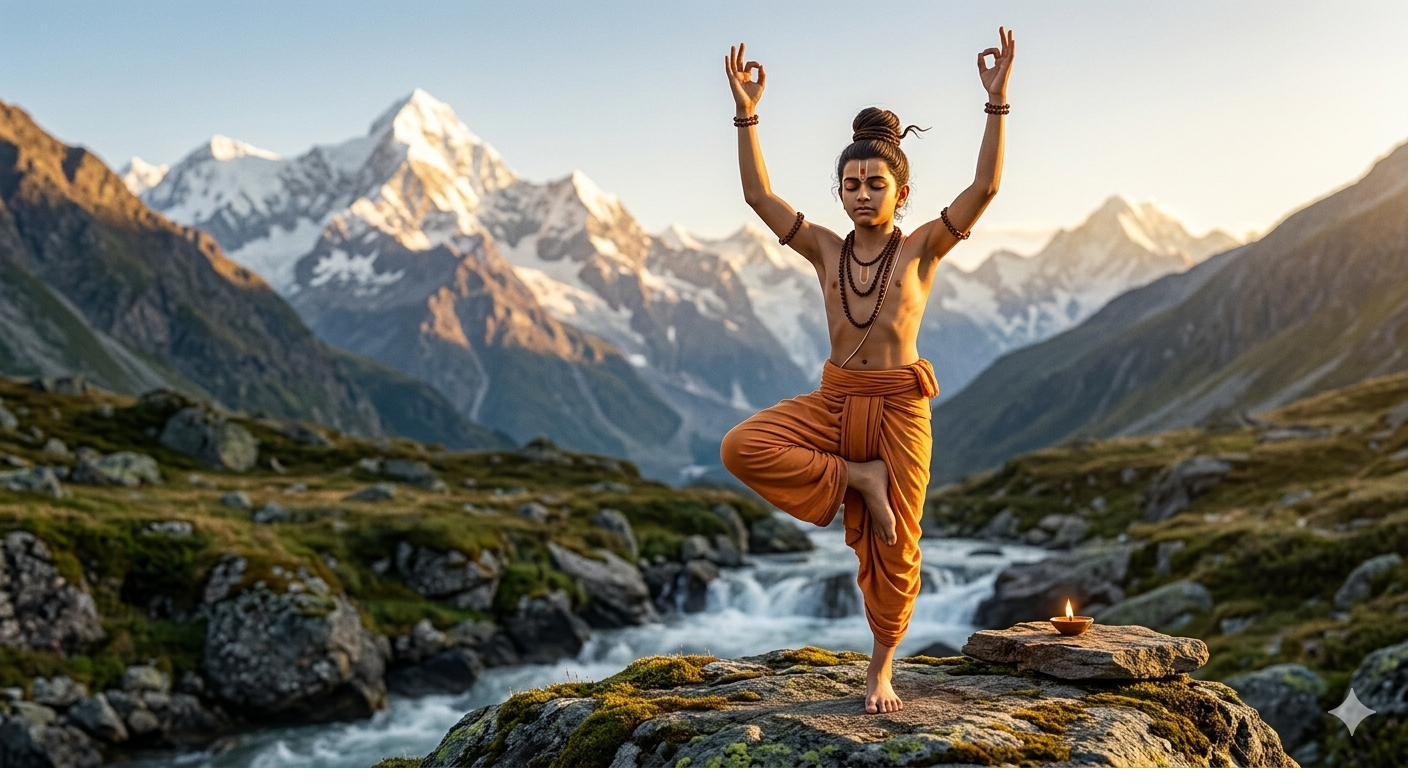
When Nilkanth Varni left home at eleven, the possessions he carried into seven years of van vicharan numbered barely five: a loincloth, a kanthi, a gourd, a small scripture — and a Shaligram. This was his Bal Mukund Shaligram. Across twelve thousand kilometres of walking, across the frost of the Himalaya and the jungles of Assam, it never left him.
When he performed tapasya at Pulhashram, it was this Shaligram he worshipped at the banks of the Kali Gandaki — the very river from which it had once come. When he founded the sampraday, the principle that every satsangi's ghar mandir would hold a Shaligram was not innovation; it was transmission. Across two centuries, every Swaminarayan household's daily worship has been in unbroken contact with that same lineage of puja, sourced from one river.
This is why, for a Swaminarayan family, standing at the Kali Gandaki is not tourism. It is arrival. The stone in the ghar mandir at home, and the stones in the riverbed at Muktinath, are the same stones — separated only by a current.
A year-long national debate — and a distinction, drawn from the shastra-s, that shaped how India came to understand its own tradition.
For most of the modern era, the Kali Gandaki and Mukti Kshetra were known only to a small circle of scholars and pilgrims. In 2023, that changed.
Two enormous stones — one of approximately eighteen tonnes, the second of twelve — were taken from the Kali Gandaki region, dispatched through Janakpur, and received at Ayodhya with grand processions in every city they passed. The Shri Ram Janmabhoomi Teerth Kshetra Trust announced that the murti-s of Shri Ram and Mata Sita would be carved from these stones.
National media widely described the stones as "Shaligram shila-s." Dr. Kul Raj Chalise — on the scholarly committee that had identified and authenticated the stones before they left Nepal — publicly clarified the distinction. The stones were Dev Shila-s: ancient, sacred, and rightly honoured. They were not Shaligram shila-s in the canonical sense. The Kali Gandaki carries both; the difference is not a technicality but a theological axis. A Shaligram bears the chakra-marks the Puranas describe — it is Vishnu already, in aniconic form. A Dev Shila is a sacred stone of the sacred river, but it is not itself a self-manifest form of Vishnu.
The debate that followed was one of the most consequential theological conversations in recent Hindu memory. Shankaracharyas, Mahants, and temple heads spoke publicly on the principle: what is svayam-vyakta — self-manifest — cannot be re-made. The Janaki Mandir at Janakpur confirmed it: pran pratishtha of a Shaligram is not performed, because the shila is already inhabited. Through all of 2023, the Kali Gandaki, Mukti Kshetra, and the idea of Shaligram were in every Hindu household's news.
The Ram Janmabhoomi Trust announced that the Ram Lalla murti would be carved from Krishna Shila — a three-billion-year-old black schist from Karkala, Karnataka — by the sculptor Arun Yogiraj. The Dev Shila-s from the Kali Gandaki were installed at Ayodhya with full honours but uncarved. On 22 January, the consecration took place. The theological principle had held.
What remained was the shift in awareness. Millions of bhakta-s who had never heard the word Shaligram now knew the stones came from one river in Nepal. Tens of millions who had never heard of Muktinath now knew it was a pilgrimage that mattered. The debate itself — more than any announcement, any campaign, any temple opening — brought the Kali Gandaki into the living memory of the global Hindu community. Bodha Retreat exists, in part, to carry that attention from moment into knowledge.
For those who want the principle stated plainly:
Ancient stones — often older than the Himalaya themselves — drawn from the Kali Gandaki region. Revered for their age, their origin in the sacred river, and the tradition of honouring the river's stones. They may be installed, consecrated, or offered as foundation stones for major temples. They are sacred ground. They are not, in the canonical sense, aniconic forms of Vishnu.
Specific ammonite-bearing stones from the Kali Gandaki, carrying the chakra-marks the Puranas describe. They are understood as Vishnu himself, in self-manifest form — no pran pratishtha is performed because no invocation is required. Worship requires only tulasi leaves and water. The shila is kept whole; it is never re-carved. To alter the form is to deny what the shila already is.